Electronic Circuit Simulator For Mac
Circuit simulation is a way of building and testing virtual models of electronic devices. It is usually cheaper and quicker to simulate a design than to build a prototype. MacSpice requires a text-file description of the circuit as input. This 'netlist' is a list of components and the nodes they connect to. Create, simulate, share, and explore electronic circuits! You can build and simulate circuits right on your phone or tablet, animate and understand how they. This is made possible by a custom-built circuit simulation engine under the hood. Jul 17, 2017 EasyEDA is a free circuit simulator on Mac for electronic circuit design and simulation. It’s a perfect tool for helping you complete your design from schematic to the finished PCB in the shortest time and easiest way. The Mac OS X system works fine on the software and has a nice Mac like user interface.
This is a list of electronic circuit design and simulation software for Mac. Since most of the circuit simulators run on Windows, it may be a problem for Mac users. Here I present you 10 of the best circuit simulation tools available on Mac that allow you to design, analyse and test a circuit virtually on a computer. The programs below may provide either analog or digital simulation capabilities or both, have a schematic editor, a waveform viewer, support resistors, capacitors, diodes, etc.
1.: EasyEDA is a tool based on the cloud platform which facilitates schematic drawing, spice simulation and PCB layout, so it works in almost any web browser on Mac, Linux, Windows and Android. EasyEDA can verify analog, digital, and mixed signal circuits with spice subcircuits and models and get results quickly from the cloud-based servers. This simulator is also very powerful and operates from a web browser.
It offers many components and is based on a different version of SPICE: ngspice. On the website you can find and use many projects and electronic circuits made by others because they are public and open hardware. It's free and also allows you to share your work with others. Qucs is a circuit simulator with graphical user interface. The software aims to support all kinds of circuit simulation types, e.g.
DC, AC, S-parameter, Transient, Noise and Harmonic Balance analysis. Pure digital simulations are also supported. Qucs works on almost any operating systems such as Solaris, Apple Macintosh, Microsoft windows, FreeBSD, NetBSD etc. The program is released under the GNU General Public License in source code form, so you will need to compile it yourself before you can run it. LTSPICE is available from a mainstream analog chip company, Linear Technology, works on Windows, OS X. It can run on your Mac under WINE.
Although it is biased towards using their parts, it is flexible and can be used with other vendor's parts. LTspice is much fast simulation of switching regulators with enhanced SPICE.

LTspice gives access to over 200 op amp models, transistor models, MOSFET models etc. A high disadvantage of LTspice is its proprietary code base which is licensed by Linear Technology. Had they made it open source, LTspice could have gone places with collaborative development. Tina Cloud is an affordable circuit simulation tool you can analyze & design analog, digital, VHDL, MCU, and mixed electronic circuits including also SMPS, RF, communication, and optoelectronic circuits and test microcontroller applications in a mixed circuit environment. TINACloud runs on most OSs and computers.
RF, communication and optoelectronic circuits; generate and debug MCU code using the integrated flowchart tool; and test microcontroller applications in a mixed circuit environment. You can analyze your circuit through more than 20 different analysis modes or with 10 high tech virtual instruments. Present your results in TINA’s sophisticated diagram windows, on virtual instruments, or in the live interactive mode where you can even edit your circuit during operation, develop, run, debug and test HDL & MCU applications. Electrical engineers will find TINA an easy to use, high performance tool, while educators will welcome its unique features for the training environment. Our software and modeling capability support SPICE, VHDL, Verilog, Verilog-AMS, SystemC models and mixed circuit models of modern integrated circuits. We create syntax compatible models for TINA, PSpice, SIMetrix, LTSpice and other simulators. Devices include Opamps, discrete semiconductors (diodes, MOSFETs, IGBTS etc.) SMPS ICs, LED drivers, AD and DA converters, Microcontrollers (ARM, PIC, AVR, XMC etc.) and more. As the developer of TINA, one of the fastest simulators on the market, we have a deep understanding of the simulation algorithms allowing us to advance accurate and time efficient device models.
If you need model development services,. You can create new TINA components from any Spice subcircuit, whether created by yourself, downloaded from the Internet, obtained from a manufacturer’s CD or from portions of schematics turned into subcircuits. TINA automatically represents these subcircuits as a rectangular block, but you can create any shape you like with TINA’s Schematic Symbol Editor. You can also use TINA’s parameter extractor program to calculate model parameters from catalog or measurement data and then add the new devices into the catalog. Your circuits can contain editable HDL blocks from the libraries of TINA and Xilinx or other HDL components created by yourself or downloaded from the Internet. TINA compiles HDL into highly efficient machine code or you can use precompiled SystemC components for speed optimization.
You can freely combine HDL and Spice macros and the schematic components of TINA. Also you can edit the HDL source of any HDL components then simulate and see the result instantly. With the built in HDL debugger you can execute the HDL code step-by-step, add breakpoints, watchpoints, display variable information and more. In addition to the large component libraries in TINA, you can create new TINA components from HDL subcircuits. From simulation. With the Live 3D breadboard tool you can automatically build a life-like 3D picture of a solderless breadboard.
When you run TINA in interactive mode, components like switches, LEDs, instruments, etc. Become “live” and will work on the virtual breadboard just as in reality. You can use this capability of TINA to prepare and document lab experiments. You can also use the integrated Flowchart Editor and Debugger to generate and debug the MCU code, learning and teaching microcontroller programming. I have used many different 'flavors' of Spice over the past 25 years. Over the last several years, my use of spice has been infrequent. Having to go back and relearn/recall how to use most spice tools is a chore.
Tina, however is so intuitive that it takes virtually no time to get going again. In my experience it is, by far, the most intuitive and easy to use simulation tool on the market.
It is ideal for the novice or occasional user AND it has all the capability a power user would need. Mark Fortunato Senior Principal MTS, Communications and Automotive Solutions Group, Maxim Integrated.
I’ve used many simulators, but none as easy to use or as fast as TINA. TINA’s multi-core support and enhanced convergence algorithms make simulation blazingly fast.
Best Electronic Circuit Simulator For Mac
I’ve modeled CM, VM, adaptive on-time converters of virtually every topology – resonant, PWM and quasi-resonant and simulations complete in seconds that previously took minutes! TINA’s interactive mode, symbolic analysis, interpreter, wizards, and design tools make TINA even more powerful! Import PSpice models seamlessly! John Rice Power Applications Engineer at Texas Instruments. I have taught analog electronics at university level, using many different Spice front-ends - since it was a ‘deck of cards’. Over the last decade or so TINA has been my preferred circuit capture and analysis tool for electrical teaching, project work and some professional applications. TINA is intuitive to use, supportive in the process of correcting errors, and produces results very quickly.
TINA has powerful analysis tools which assist in the understanding of circuit operation. It also has a very direct route to circuit realization. Our students adopt TINA as a versatile tool in their first year of electronic design and apply it throughout their degree course.
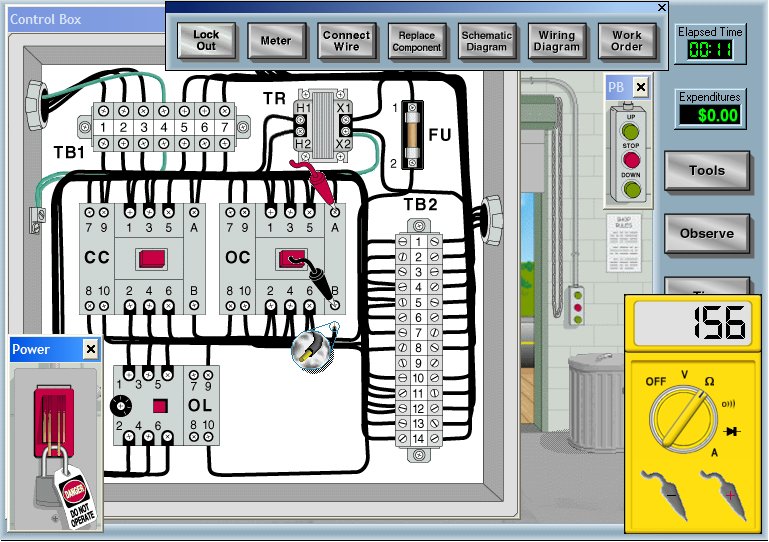
Free Electronic Circuit Simulators
It represents very good value. David Binnie Head of Engineering Research School of Engineering and the Built Environment. I have taught electrical engineering, electronics and Computer-Aided Design (EDA) for more than 40 years at Moscow Technological University (MIREA). In my classes I have used numerous programs for modeling electronic circuits - from Electronics Workbench to OrCAD and SystemC. I am confident that for teaching electrical engineering and electronics TINA is the best software available.
TINA has a very friendly graphical user interface, with simple settings and setup of simulations. All information about the circuit is enclosed in a single file, simulations are performed very quickly and accurately, with results displayed, so the process is easily mastered by students. Alekhin Vladimir Alexandrovich Doctor of Technical Sciences, Professor Moscow Technological University (MIREA).